A journey from Prem Mandir in Vrindavan to Govardhan is not measured in kilometers, it is measured in faith. Between the sound of bells and the dust of Braj, every step feels alive with devotion. The Prem Mandir to Govardhan Distance may be short, but the road that connects these two sacred places holds a silence that only pilgrims can understand. It is not just a drive, it is a slow walk through the heart of Krishna’s land, where even the air feels like prayer.
Table of Contents
ToggleVrindavan to Govardhan Travel Guide – The Road Where Devotion Walks
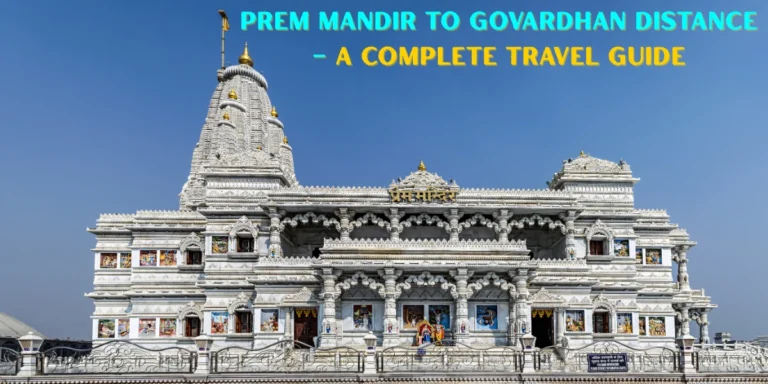
Vrindavan is where love itself lives. The streets echo with Radhe Krishna, and the mornings open with the sound of temple bells. The journey begins from Prem Mandir, that white marble temple which glows softly in sunlight and shines like silver at night. From here, the road to Govardhan stretches for nearly 25 kilometers. By car, it takes about forty to fifty minutes, but the spirit of the road is timeless.
People begin early, when the sky is pale and the air still smells of morning flowers. The drive passes through small villages where life is simple, and faith is the only language people speak. This is not travel — this is Braj itself moving beside you.
Mathura to Govardhan Route – A Path Full of Stories
Many pilgrims start from Mathura, stop at Vrindavan, and then move toward Govardhan. The Mathura to Govardhan route is straight and clear, yet full of stories at every turn. On both sides, you see peepal trees wrapped with red threads, small shrines built under open sky, and people walking barefoot, whispering the names of Krishna.
On the way, the road passes near Radha Kund and Kusum Sarovar. The water there shines quietly, and if you pause for a moment, you can almost feel the old Braj legends breathing around you.
Prem Mandir Location – Where the Journey Begins
At the beginning of the road sits Prem Mandir—the center of Vrindavan. The walls of this marble temple depict various stories of Krishna: raising Govardhan hill, playing his flute, and dancing in love. Notably, at night, the temple changes colors along with beautiful bhajans ringing in the air; the whole area bathes in a soft glow, as if the night itself is worshipping.
Standing here before you leave, you feel that your journey to Govardhan has already begun. The Prem Mandir to Govardhan Distance may be short, but between these two places lies the story of Krishna himself — from his childhood in Vrindavan to his strength at Govardhan.
Govardhan Parikrama Details – Walking in Faith
When you reach Govardhan, the first sight humbles you. The hill is not high, not wide, but it feels alive. Devotees walk around it barefoot — the Govardhan Parikrama — nearly 21 kilometers of faith and prayer. It takes about five to six hours to complete, but no one counts the time. Every step feels light, every breath feels pure.
There are small temples and ponds along the way, and sadhus sitting quietly under trees. You hear the sound of bells, the soft chanting of Radhe Shyam, and you realize that this walk is not about reaching the end — it is about remembering why you began.
How to Reach Govardhan – Simple Ways for a Sacred Journey
Govardhan is easy to reach. From Prem Mandir in Vrindavan, you can take a taxi, a local bus, or even an auto-rickshaw. The drive takes less than an hour. Those who come from Delhi or Agra usually stop at Mathura first, and then continue onwards.
But there are people who choose to walk a part of this road — singing bhajans, barefoot, with the sound of Kartals in their hands. They say the journey feels different when your feet touch the dust of Braj.
Vrindavan Sightseeing – The City That Breathes Devotion
Before you leave for Govardhan, you may spend time exploring Vrindavan itself. The Vrindavan sightseeing list is long and endless — Banke Bihari Temple, ISKCON, Nidhivan, Seva Kunj — each one has its own rhythm, its own silence. You walk through narrow streets filled with flower stalls, prasad shops, and bhajan sounds. Here, faith doesn’t need words; it moves quietly between one heart and another.
Braj Yatra Itinerary – A Journey Without an End
A complete Braj Yatra itinerary often starts from Mathura, moves to Vrindavan, then to Barsana, Nandgaon, and finally Govardhan. The roads are small, the distances are short, but the devotion they hold cannot be measured. Every village, every kund, every temple adds something unseen to your heart.
Those who walk through Braj know that this is not travel — it is remembrance. A journey through love, through stories, through the dust that still remembers the footsteps of Krishna.
Best Time to Visit Govardhan – When the Air Itself Prays
The best time to visit Govardhan is between October and March, when the air is soft and the sun feels kind. Winter brings peace; The mornings are calm, and the evenings are lit with lamps. During Govardhan Puja and Kartik Purnima, the entire city sparkles with faith – thousands of lamps, countless mantras and a sea of devotion swirling around the hill.
But even on ordinary days, the place feels alive. You can sit near the kund, watch the lamps float slowly on the water, and feel that the air itself has begun to pray.
A Journey That Stays Within
The road from Prem Mandir to Govardhan Distance may take less than an hour, but the journey lasts far longer. The white marble of Prem Mandir, the dust of Govardhan, the songs of Braj — they follow you even after you return. The feeling doesn’t fade, it deepens.
For those who wish to walk through devotion and carry home its peace, Mathura Vrindavan Temples opens this sacred path. Because some distances are not meant to be travelled — they are meant to be felt.
FAQs For Prem Mandir to Govardhan Distance
1. What is the exact Prem Mandir to Govardhan distance?
The distance from Prem Mandir in Vrindavan to Govardhan is around 25 kilometers, a journey of less than an hour by road. But the real distance is felt in devotion, not in time.
2. How can I travel from Prem Mandir to Govardhan?
You can travel by car, taxi, or local bus. Many devotees begin early in the morning when the air is calm and the roads are quiet. Some walk part of the way, singing bhajans as they go.
3. What is the best time to visit Govardhan?
The best time to visit Govardhan is between October and March, when the weather is pleasant. The days of Govardhan Puja and Kartik Purnima are especially beautiful when the whole town shines with lamps and chants.
4. What is special about the Govardhan Parikrama?
The Govardhan Parikrama is a sacred walk of about 21 kilometers around the holy hill. Devotees walk barefoot, remembering Krishna who once lifted this very hill to protect the people of Braj. Every step feels like prayer.
5. How much time does it take to complete the Govardhan Parikrama?
It usually takes around 5 to 6 hours, but no one counts the time here. Some walk slowly, some stop to pray at small temples along the path. The heart leads the pace.
6. Is there any place to visit on the way from Vrindavan to Govardhan?
Yes, you can stop at Radha Kund and Kusum Sarovar. Both are quiet and deeply sacred. The waters of Radha Kund shine with the peace of devotion, and Kusum Sarovar looks golden at sunset.
7. Where exactly is Prem Mandir located?
Prem Mandir stands on the Mathura–Vrindavan road. It is easy to reach from both cities and is known for its white marble structure and beautiful evening lights.
8. How to reach Govardhan from Mathura or Delhi?
From Mathura, Govardhan is about 25 kilometers away. You can take a cab or a local bus. From Delhi, it takes around three and a half hours by road, or you can come by train to Mathura Junction and continue onwards.
9. What are the nearby temples to visit during this trip?
During this journey, you can visit Banke Bihari Temple, ISKCON Temple, Nidhivan, and Seva Kunj in Vrindavan. In Govardhan, don’t miss Radha Kund, Daan Ghati Temple, and Mansi Ganga.
10. Why is the journey from Prem Mandir to Govardhan so special?
Because it connects two sacred hearts of Braj—Vrindavan and Govardhan. One speaks of Krishna’s love, the other of his strength. Between them lies a road filled with songs, stories, and the soft dust of devotion.